
“So, what next?”
That’s the question at the forefront of most of our minds when we finally finish that dreaded (glorious) manuscript. The answer, of course, can vary widely, influenced by the contents of that manuscript, our writing career goals, and so much more. If you’re hoping to self-publish, the same stands true.
Planning to take on the ambitious role of being your own publisher? Here are five mistakes to avoid – a few of which this writer learned the hard way.
Note: these pieces of advice apply to the publishing process and not the writing process, meaning at least the first draft of your work has been completed.
1. Not Doing Your Research/Not Making a Plan

This was one of those lessons I learned the hard way. After finishing the final draft of my book, Crossroads, I went through the process of going from manuscript to actual book pretty much by the seat of my pants.
Learning as I went along was fun (and pretty adrenaline filled) but I would not recommend it, mainly because by the end of it all I was left extremely burned out. In fact, it took me several months to recover from said burnout. And sometimes I feel as if I’m still recovering.
Sit down and prepare a plan, or at least a roadmap, before you set out on your self-publishing journey. Ask yourself important questions like How will I get my books printed? Do I want to sell print copies or just ebooks? Do I have a target audience?
Then, do some research on the steps that you will be taking from start to finish. There’s a lot that goes into publishing a book. And sure, it is extremely rewarding, but it can also become overwhelming if you’re not prepared.
Tip: When it comes to research, the website Reedsy is a pretty helpful resource. If you’re a Belizean writer, you can also find a few advice articles on the Belizean Writers Guild website.
2. Not Getting Beta Readers and Proofreaders

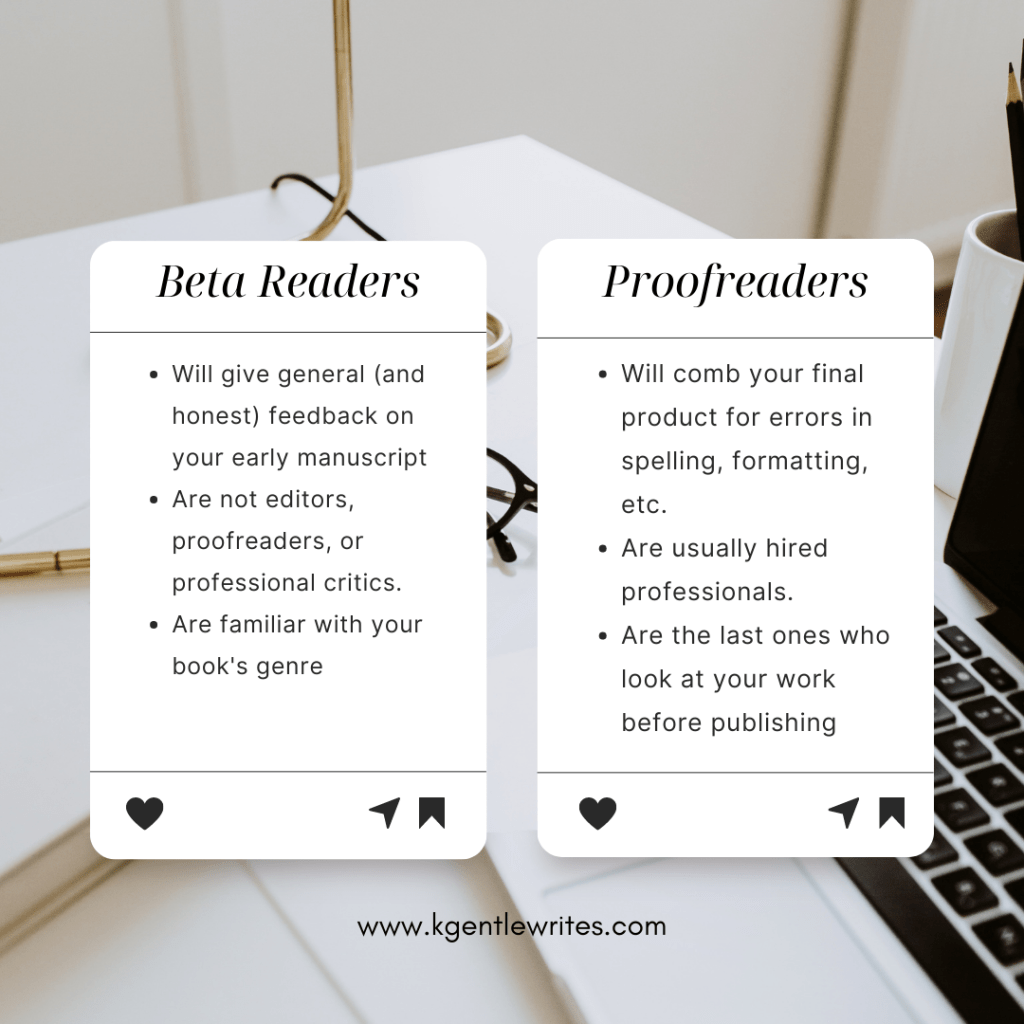
Both proofreaders and beta readers are invaluable assets to any writer hoping to self-publish, though there are some key differences between the two. Most importantly, they’re going to be needed at different points in your publishing journey.
Beta-readers come into play after you’ve finished your first or second (or third) draft. They’re the ones that will be able to provide honest feedback on your early manuscript. A beta-reader will give their opinion on things like your characters, your pacing, and your overall plot. (Or, if you’re publishing poetry, maybe the structure of your book).
In essence, they’re the first persons to look at your work from the perspective of your intended audience. Your friends, family members, writing buddies, and even your favorite bookworm can be Beta-readers, but it pays to also enlist the help of those you know will give you honest and helpful feedback.
Check out (fellow author and friend) Amanda Ross who does beta reading for hire.

Proofreaders, on the other hand, are the final set of eyes on your work. When all the edits and rewrites are done, they are the ones to check for errors in grammar, spelling, formatting, punctuation, and capitalization. A good proofreader is usually a trained professional and someone you’ll likely have to hire.
Tip: Also, if you can afford it, investing in hiring an editor can make a huge difference in your end product. There’s nothing wrong with self-editing, to an extent, but even the most skilled writer can benefit heavily from an editor.
3. Not Investing in a Good Book Cover
Investing in a good book cover goes far beyond investing financially. Sure, you want your cover to look as appealing and as professional as possible, which often involves spending quite a few bucks, but you also want to make sure the cover of your book reflects its contents.
Put lots of thought into what you want it to look like. After all, the writing world is one of the few places where people can and will judge a book by its cover.

4. Not (Continuously) Marketing Your Book
The task of getting your book into the hands of readers continues long after the day of your launch. If you’re hoping to make some income from your work, never underestimate the power of marketing.

There are myriad ways to promote your work, from simple social media posts and ads to approaching bookstores and sellers. Develop a marketing strategy for yourself, even if that means simply outlining the methods you plan to use to get more people interested in reading your book.
Tip: always start marketing your book long before you publish. This helps to build anticipation and also helps to build an author platform beforehand.
5. Not Celebrating Your Hard Work

This was another one of those hard-learned lessons. When all is said and done (and published) don’t forget to reward yourself for your hard work. There is power in celebrating your wins, no matter how big or small.
It can create the motivation you need to keep doing what you’re doing. It can create memories that serve as a reminder that you did that.
Managing to successfully write and publish a book is no small feat. It’s no easy feat, either. In fact, the very moment you finished your first draft, you became a part of the very small percentage of writers who actually manage to finish a book.

Have you written and published a book before? What other tips and advice would you give to budding authors?
 Khaila A. Gentle
2 thoughts on “5 Mistakes to Avoid When Self-Publishing Your Book”